Headphone Audio Amplifier
Custom-designed op-amp based headphone amplifier with Baxandall volume control and low-noise analog layout.
Overview
Designed and built a standalone headphone amplifier optimized for clean signal amplification and low noise. The amplifier uses a dual-rail ±15V supply and a multi-stage op-amp architecture consisting of a gain stage followed by a Baxandall volume control and a dual op-amp output stage capable of driving high-impedance headphones. The project included full analog design, simulation, PCB layout, power supply filtering, and enclosure design.
Problem / Motivation
Consumer headphone amplifiers often rely on off-the-shelf designs without careful attention to grounding, power filtering, or analog layout. The goal of this project was to design a clean, low-noise amplifier from the ground up that could reliably drive high-impedance headphones while minimizing hum and signal distortion.
Technical Design
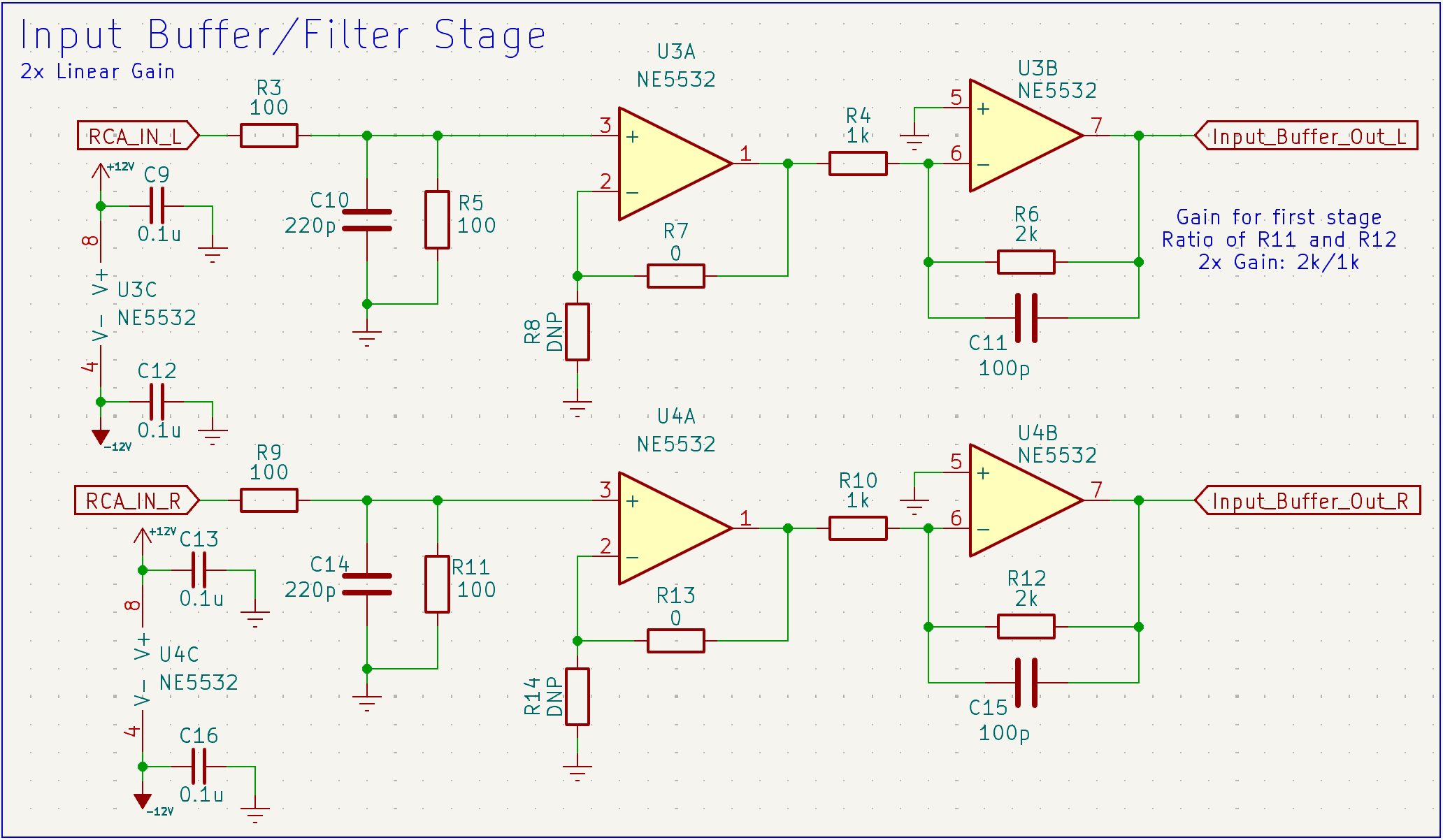
The amplifier accepts RCA line-level input and outputs through a 1/4" headphone jack. The signal path begins with a 2× gain input stage implemented with an op-amp, followed by a Baxandall volume control network that provides low-distortion analog attenuation. A dual op-amp output stage buffers and drives the headphone load. The circuit operates from a dual-rail ±15V supply derived from a 15V DC input with filtering and decoupling to reduce supply noise. The PCB was designed as a two-layer board with careful analog layout practices including star grounding, power decoupling near op-amps, and short signal paths to reduce noise and interference.
Key Challenges
- Designing a low-noise grounding scheme on a two-layer PCB to minimize hum and ground loops
- Managing power supply noise and ensuring proper decoupling for stable op-amp operation
- Balancing gain structure and volume control to avoid clipping while maintaining sufficient output drive
Results
- Successfully drives high-impedance headphones with clean amplification
- Low audible hum through careful grounding and power filtering
- Validated performance through subjective listening tests