AEGAN For Mechanical Design
Developed a autoencoder and generative adversarial network for mechanical design.
Overview
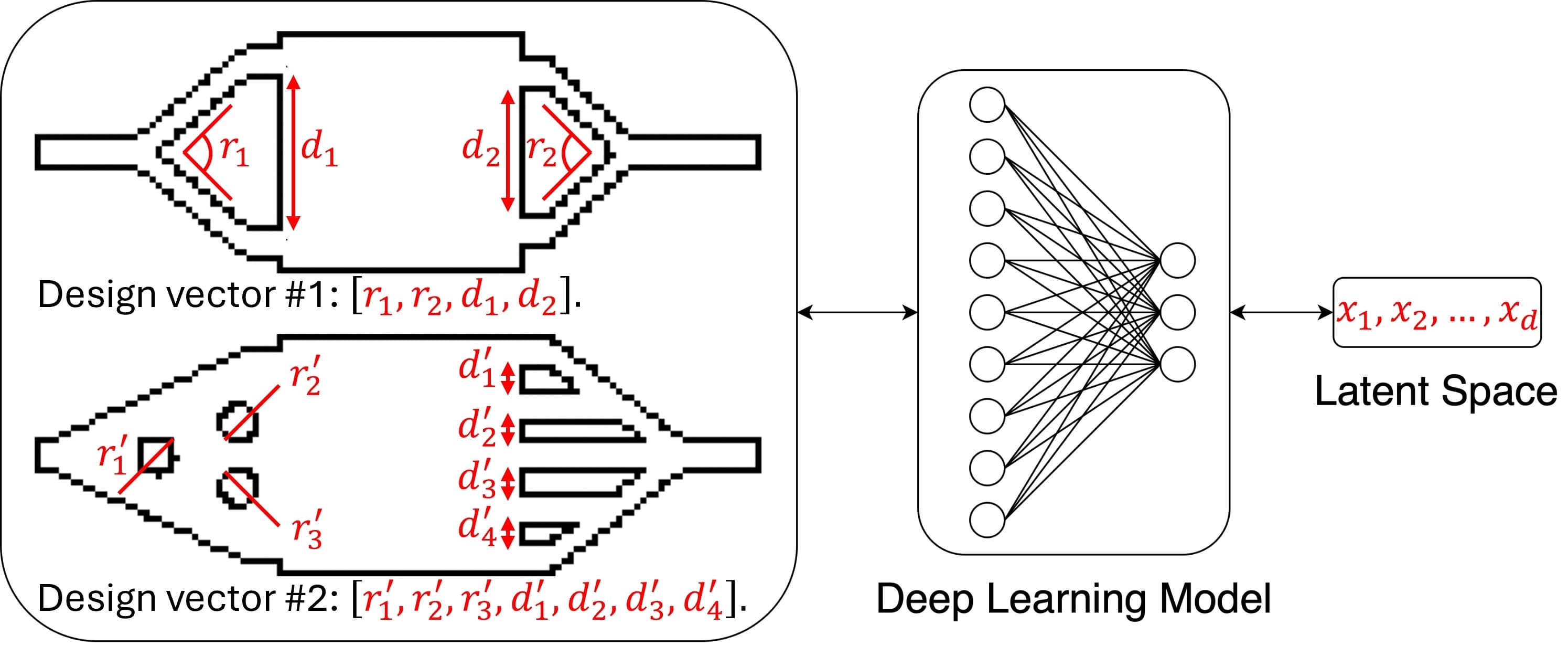
A generative machine learning framework for exploring novel design spaces, using redox flow battery manifolds as a case study. Combined Generative Adversarial Networks with Bayesian Optimization to create interpretable design spaces from heterogeneous engineering inputs.
Problem / Motivation
Generative models have shown promise in design optimization, but are limited for several reasons in engineering applications: 1. They require large datasets of existing designs 2. These datasets are often heterogeneous and therefore difficult to encode 3. Optimization across generated designs can be inneficent For flow battery manifolds specifically, the challenge is in acheiving uniform electrolyte distribution while minimizing backpressure and maintaining manufacturability. The goal of this research was to develop a systematic method to construct datasets to enable interpretable exploration of the design space.
Technical Design
Single-leader coordinator with Redis Streams for task persistence. Workers use consumer groups for at-least-once processing. Heartbeats and lease-based locking prevent duplicate execution.
Key Challenges
- Achieving exactly-once semantics without sacrificing throughput
- Graceful shutdown without dropping in-flight tasks
Results
- Reduced p99 latency by 40% vs. previous queue
- Zero dropped tasks during deployment after implementing drain mode